
Ohio homeowners have always dealt with unpredictable weather. But in recent years, storms across the Midwest have become more intense, more frequent, and more destructive. From powerful wind events and heavy rainfall to hailstorms and sudden temperature swings, Ohio weather is changing — and your roof is your home’s first line of defense.
If your roofing system isn’t prepared, small vulnerabilities can quickly turn into expensive damage. Here’s what you need to know about protecting your home against extreme Midwest storms.
How Extreme Midwest Storms Are Impacting Ohio Homes
Ohio sits in a region where warm southern air collides with cooler northern systems. This creates volatile storm patterns, especially during spring and summer.
Stronger Wind Storms
Wind damage is one of the most common roofing issues in Ohio. Gusts exceeding 50–70 mph can:
Lift and loosen shingles
Tear flashing away from chimneys and vents
Expose underlayment
Cause fallen tree damage
Even minor wind damage can compromise your roof’s integrity and lead to leaks.
Hail Damage on Roofing Systems
Hailstorms are becoming more frequent and severe throughout the Midwest. Hail can:
Crack or bruise asphalt shingles
Knock granules loose
Shorten roof lifespan
Create hidden structural weaknesses
The problem? Hail damage isn’t always visible from the ground.
Heavy Rain & Flash Flooding
Ohio has seen increases in high-intensity rainfall events. When your roof drainage system isn’t functioning properly, water can:
Pool on low-slope areas
Back up under shingles
Overflow clogged gutters
Enter your attic space
Water intrusion often starts small — but can quickly lead to mold, rot, and interior ceiling damage.
Rapid Freeze-Thaw Cycles
Winter in Ohio brings fluctuating temperatures. Freeze-thaw cycles cause materials to expand and contract repeatedly. Over time, this leads to:
Cracked flashing
Deteriorated sealants
Ice dams
Premature shingle failure
Extreme temperature shifts quietly weaken roofing systems year after year.
Signs Your Roof May Not Be Storm-Ready
Many homeowners don’t realize their roof is vulnerable until after a major storm. Watch for these warning signs:
Missing or curling shingles
Granules collecting in gutters
Water stains on ceilings
Sagging roof sections
Damaged or rusted flashing
Gutters pulling away from the home
If your roof is over 15–20 years old, it may be especially susceptible to severe storm damage.
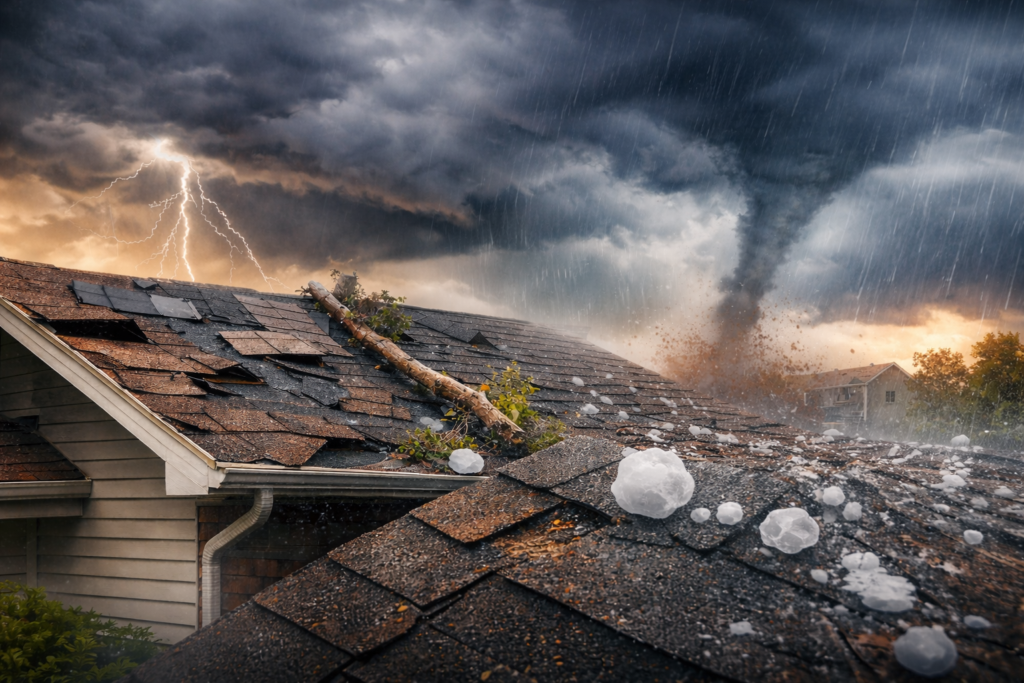
How to Prepare Your Roof for Extreme Ohio Weather
The best defense against Midwest storms is proactive maintenance. Here’s how to strengthen your roof before severe weather hits.
Schedule a Professional Roof Inspection
An annual roof inspection can identify small issues before they become major repairs. Professional contractors look for:
Loose shingles
Nail pops
Flashing gaps
Ventilation issues
Hidden hail damage
Early detection saves thousands in potential repairs.
Upgrade to Impact-Resistant Materials
If your roof is aging, consider upgrading to:
Impact-rated asphalt shingles
Architectural shingles with higher wind ratings
Improved underlayment systems
Reinforced flashing and sealants
Modern roofing materials are designed to withstand stronger Midwest storms.
Improve Roof Ventilation & Insulation
Proper attic ventilation reduces moisture buildup and limits freeze-thaw damage. Balanced ventilation also helps:
Extend roof lifespan
Prevent ice dams
Reduce energy costs
Storm protection starts from the inside out.
Maintain Gutters & Drainage Systems
Clean gutters and downspouts regularly. Proper drainage prevents water from backing up under shingles or pooling near your foundation.
What to Do After a Major Storm
After severe weather passes, take these steps:
Perform a visual inspection from the ground.
Check for fallen debris and shingle loss.
Look for water stains inside your home.
Contact a professional roofing contractor for a storm damage assessment.
Avoid climbing onto your roof — it may be structurally compromised.
Document damage with photos in case you need to file an insurance claim.
Why Preventative Roofing Maintenance Matters in Ohio
Replacing a roof prematurely can cost significantly more than routine inspections and minor repairs. With Ohio weather becoming more extreme, preventative maintenance isn’t optional — it’s essential.
A strong roofing system:
Protects your home’s structural integrity
Preserves property value
Reduces long-term repair costs
Provides peace of mind during storm season
Storm patterns may be changing, but your preparedness can stay ahead of the damage.
Is Your Roof Ready for the Next Midwest Storm?
Extreme Midwest storms aren’t going away. The real question is whether your roof is prepared.
If you’re unsure about your roof’s condition, now is the time to act — before the next high-wind or hail event strikes.
A professional inspection can give you clarity, confidence, and a clear plan to protect your home.